
la llorona de mazatlan pdf
La Llorona de Mazatlan’s legend, often documented in accessible PDF formats, details the weeping woman’s haunting presence near coastal waters, captivating local beliefs.
Overview of the Legend
La Llorona, meaning “The Weeping Woman,” is a deeply ingrained spectral figure within Mexican folklore, and the Mazatlan variation maintains this core narrative of maternal grief. The legend centers around a woman who, driven to despair – often due to heartbreak or societal pressures – drowned her children. Now, she endlessly roams waterways, lamenting their loss with a haunting wail.
The readily available “La Llorona de Mazatlan PDF” documents frequently detail this tragic backstory, emphasizing the specific local interpretations of her motivations and appearance. These PDFs serve as repositories of oral tradition, preserving the story for generations. The legend isn’t merely a ghost story; it’s a cautionary tale, a reflection of societal anxieties, and a poignant exploration of loss and female suffering.
Cultural Significance in Mexico
La Llorona transcends a simple ghost story; she embodies profound cultural anxieties within Mexico, particularly concerning societal expectations placed upon women and the consequences of transgression. Her tale serves as a warning, reinforcing traditional values and exploring themes of motherhood, loss, and societal judgment. The widespread dissemination of the “La Llorona de Mazatlan PDF” demonstrates the legend’s enduring relevance.
These PDFs aren’t just collections of narratives; they represent a continuation of oral tradition, preserving a vital part of Mexican identity. The story’s adaptability allows for regional variations, like the Mazatlan version, reflecting local histories and beliefs. La Llorona’s presence in music, literature, and art further solidifies her iconic status within Mexican culture.
The Mazatlan Variation: Specifics
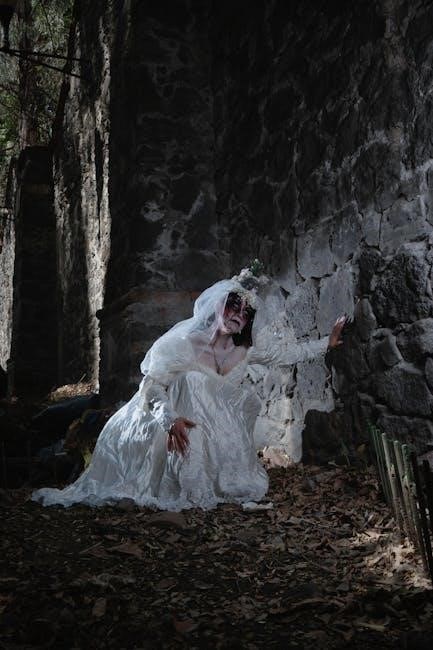
The La Llorona de Mazatlan variation often centers around her haunting the coastal areas and estuaries surrounding the city, differing from inland accounts. Many “La Llorona de Mazatlan PDF” documents detail her appearance as clad in a white dress, perpetually searching for her children near the water’s edge. Locals believe she specifically targets those who wander alone at night.
Unlike some versions, the Mazatlan tale frequently emphasizes her sorrowful wails echoing across the bay, a chilling sound warning of impending misfortune. These PDFs often include eyewitness accounts and local interpretations of her motives, adding layers to the legend. The story serves as a cautionary tale about respecting the sea and its dangers.
Origins of La Llorona
La Llorona’s origins trace back to pre-Hispanic beliefs and colonial accounts, with early written records appearing in Fray Bernardino de Sahagún’s work, as detailed in PDFs.
Pre-Hispanic Roots & Sahagún’s Account
La Llorona’s story isn’t solely a product of Spanish colonization; its roots delve into pre-Hispanic Mesoamerican beliefs concerning deities and spirits associated with water and death. Some scholars suggest parallels between La Llorona and ancient goddesses demanding sacrificial offerings, particularly of children, to appease them and ensure agricultural fertility.
Crucially, the first documented written account appears in the work of Fray Bernardino de Sahagún during the 16th century. His extensive codices, meticulously recording Aztec culture, mention omens and presages before the Spanish conquest, including narratives of wailing women—potential precursors to the modern legend. While not explicitly La Llorona as we know her, these accounts provide a foundational layer, often explored within detailed analyses found in La Llorona de Mazatlan PDF compilations. These PDFs often highlight Sahagún’s observations as pivotal in understanding the legend’s evolution.
Colonial Period Influences
The Spanish colonial era profoundly reshaped pre-Hispanic beliefs, layering Catholic guilt and morality onto existing indigenous narratives. The arrival of Christianity introduced concepts of sin, repentance, and eternal punishment, which became interwoven with the figure of the weeping woman. Stories began to emphasize a woman’s transgression – often infidelity or the abandonment of societal norms – leading to the tragic loss of her children;
This fusion of cultures is a key focus within La Llorona de Mazatlan PDF documents. These resources often detail how Spanish anxieties about racial mixing and female sexuality contributed to the demonization of indigenous women within the legend. The colonial context transformed the spirit into a cautionary tale, reinforcing patriarchal structures and societal expectations. Analyses within these PDFs frequently explore this complex interplay of religious and cultural forces.
Evolution of the Story Over Time
Initially documented by Fray Bernardino de Sahagún in the 16th century, the legend of La Llorona underwent significant transformations. Early accounts focused on presages of the Spanish conquest, but over centuries, the narrative shifted towards a more personalized tragedy of maternal loss and despair. Oral tradition played a crucial role, adapting the story to reflect local anxieties and societal changes.
La Llorona de Mazatlan PDF compilations illustrate this evolution, showcasing how the tale varies across generations. Modern interpretations, often found within these digital resources, explore psychological themes of grief and trauma. The story’s enduring power lies in its adaptability, continually resonating with contemporary audiences while retaining its core elements of sorrow and haunting.

The Core Narrative
La Llorona de Mazatlan PDF files consistently depict a woman’s tragic drowning of her children, followed by eternal, mournful wandering and haunting wails.
The Story of a Woman and Her Children
La Llorona de Mazatlan PDF accounts universally center around a woman, often described as beautiful, who tragically loses her children to the water. The narratives frequently detail a scenario where she either intentionally drowns them, overwhelmed by despair or abandonment, or accidentally loses them during a moment of carelessness near the sea.
These digital documents emphasize the profound grief that consumes her, driving her to a desperate and irreversible act. The PDFs often explore themes of societal pressures, heartbreak, and the devastating consequences of unchecked sorrow. The woman’s identity and the precise circumstances leading to the tragedy vary slightly between versions, but the core element of maternal loss remains constant within the La Llorona de Mazatlan lore.
The Drowning and Eternal Mourning
La Llorona de Mazatlan PDF files consistently depict the drowning as the pivotal, horrific event that condemns the woman to an eternity of anguish. The act, whether intentional or accidental, seals her fate, transforming her into a spectral figure forever bound to the waterways where her children perished.
These documents detail her ceaseless wandering, searching for her lost offspring, and her inconsolable weeping – the source of her name. The PDFs emphasize that she isn’t seeking redemption, but rather endlessly reliving her tragedy. Her mournful wails, described as chilling and heart-wrenching, echo through the night, a constant reminder of her irreversible loss and eternal sorrow within the La Llorona de Mazatlan legend.
The Wail and its Meaning
La Llorona de Mazatlan PDF accounts universally portray the wail – a sorrowful, haunting cry – as the core of the legend. It’s not merely a sound, but a manifestation of her unending grief and desperate search for her children. The PDFs often interpret the wail as both a warning and a lure, signifying impending misfortune or even death to those who hear it.
Local interpretations, detailed within these digital documents, suggest the cry embodies regret and the consequences of maternal failings. Some believe it’s a plea for forgiveness, while others see it as a chilling reminder of the dangers lurking near the water. The intensity and proximity of the wail, according to the La Llorona de Mazatlan lore, directly correlate with the level of danger.

Regional Variations
La Llorona de Mazatlan PDF files highlight unique details; her appearance and behaviors differ from tales in Guanajuato or Puebla, reflecting local beliefs.
La Llorona in Guanajuato and Puebla
La Llorona’s legend is deeply ingrained in the cultural fabric of Guanajuato and Puebla, often serving as a cautionary tale. While Mazatlan PDF documents detail a localized version, these central Mexican states represent the story’s most prominent strongholds. Accounts frequently emphasize her tragic backstory – a woman who drowned her children and now eternally searches for them near rivers and lakes.
The narratives in these regions often focus on the emotional weight of her grief and the consequences of societal pressures. Unlike some variations, the emphasis isn’t always on luring others to their deaths, but rather on the haunting sorrow of a mother’s loss. These foundational stories, predating the specific Mazatlan iterations found in digital PDFs, heavily influence broader perceptions of La Llorona throughout Mexico and beyond.
Specifics of the Mazatlan Tale
The Mazatlan variation of La Llorona, frequently detailed in circulated PDF documents, often connects her wail to specific coastal locations and waterways. Unlike inland versions, this iteration emphasizes her presence near the Pacific Ocean, reflecting the region’s maritime culture. Local accounts suggest she appears as a spectral figure draped in white, searching not just for children, but for a lost love as well.
These Mazatlan PDFs often include details about specific encounters reported by residents, adding a layer of localized authenticity. The tale frequently warns against wandering alone near the beaches at night, emphasizing the dangers of both the sea and the spirit. This regional adaptation distinguishes itself through its unique blend of sorrow, loss, and the ever-present ocean.
Differences in Appearance and Behavior
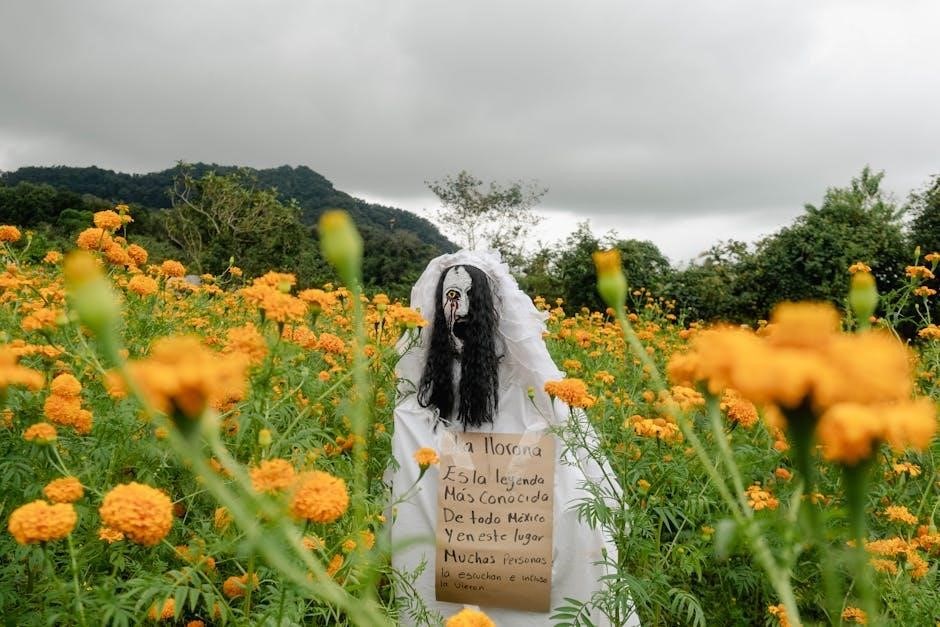
Mazatlan’s La Llorona, as described in numerous PDF compilations of local lore, often diverges in appearance from depictions in other regions. While typically portrayed in white, some accounts detail a shimmering, almost translucent form, reflecting the ocean’s light. Her behavior, according to these documents, isn’t solely focused on luring children; she’s also said to search for a specific sailor lost at sea.
Unlike versions emphasizing solely maternal grief, the Mazatlan PDF narratives suggest a complex sorrow stemming from romantic betrayal. Witnesses report a more mournful, less aggressive wail, a sound of profound longing rather than vengeful anger. This nuanced portrayal sets her apart, highlighting a unique emotional depth within the legend.
La Llorona in Popular Culture

Mazatlan’s La Llorona, popularized through shared PDF documents, inspires local art, music, and storytelling, preserving the legend for new generations.
Music and Songs (e.g., Naughty Boy’s “La La La”)
La Llorona’s mournful tale frequently inspires musical interpretations, echoing her sorrowful cries. While Naughty Boy’s “La La La” featuring Sam Smith isn’t directly about the Mazatlan variation, it embodies the haunting vocalizations associated with the legend. Locally, corridos and traditional folk songs in Mazatlan often recount specific details found within circulated PDF documents detailing the local lore.
These songs frequently emphasize the woman’s grief and the chilling sound of her wails near the water. The PDF versions of the legend often include lyrics to these regional songs, further cementing the connection between music and the supernatural narrative. Musicians draw upon the emotional weight of the story, creating evocative melodies that capture the essence of La Llorona’s eternal mourning.
Literature and Poetry
La Llorona’s story has permeated Mexican literature, inspiring countless poems and short stories. Many authors explore themes of loss, guilt, and societal pressures through her tragic narrative. In Mazatlan, local writers frequently compile versions of the legend, often distributing them in PDF format to preserve and share the regional nuances.
These literary works often delve deeper into the woman’s backstory, offering interpretations of her motivations and the circumstances leading to her despair. The PDF documents frequently contain poetic verses recounting her sorrowful wanderings. These artistic expressions amplify the emotional impact of the legend, solidifying La Llorona’s place as a powerful symbol within Mazatlan’s cultural identity.
Film and Television Adaptations
While a definitive, large-scale cinematic adaptation specifically focused on the Mazatlan variation of La Llorona remains elusive, the legend frequently appears as a thematic element in broader Mexican horror and supernatural productions. Independent filmmakers in the region have occasionally created short films, sometimes shared as downloadable PDF storyboards or behind-the-scenes materials.
Television series exploring Mexican folklore often incorporate La Llorona, though typically drawing from the more widespread narratives. The availability of detailed accounts in PDF format, circulating locally, serves as source material for these adaptations, influencing character portrayals and plot points. These adaptations help to keep the legend alive and relevant for new generations.

The “La Llorona de Mazatlan PDF” Phenomenon
La Llorona de Mazatlan PDF documents compile local accounts, spreading the tale’s specifics and fostering belief through easily accessible, digital storytelling.
Why the PDF Format?
The prevalence of La Llorona de Mazatlan in PDF format stems from its practicality for sharing detailed local narratives. PDFs ensure consistent formatting across devices, preserving the story’s presentation as intended by the compiler. This digital format facilitates easy distribution amongst residents and researchers alike, bypassing geographical limitations.
Furthermore, PDFs offer a sense of permanence and authority, often containing collected testimonies, historical context, and even purported eyewitness accounts. The format allows for inclusion of images and illustrations, enhancing the immersive experience for readers. Accessibility is also key; PDFs are readily viewable on smartphones, tablets, and computers, contributing to the legend’s continued circulation and cultural relevance within the Mazatlan community and beyond.
Content Typically Found in Mazatlan PDFs
La Llorona de Mazatlan PDFs commonly feature variations of the core narrative – a woman’s tragic loss of her children and subsequent haunting near waterways. These documents often include specific locations within Mazatlan where sightings are frequently reported, like beaches and estuaries. Local testimonies detailing personal encounters with the weeping woman are a staple, adding a layer of authenticity.
Many PDFs also explore the historical context of the legend, linking it to pre-Hispanic beliefs and colonial influences. Some delve into the psychological interpretations of the story, examining themes of grief and female suffering. Illustrations, maps pinpointing alleged sighting locations, and even purported protective rituals are frequently included, enriching the overall presentation.
Spread and Accessibility of the PDF
The proliferation of La Llorona de Mazatlan PDFs is largely due to their ease of sharing via social media, email, and messaging apps. Local tourism websites and paranormal enthusiast forums frequently host these documents, increasing their reach. The PDF format’s compatibility across various devices – smartphones, tablets, and computers – contributes to its widespread accessibility.
This digital distribution allows the legend to transcend geographical boundaries, reaching both residents and tourists. The relatively small file size of these PDFs facilitates quick downloads, even with limited internet connectivity. Consequently, the story of La Llorona continues to evolve and gain traction through this readily available medium.

Psychological Interpretations
La Llorona’s tale, often shared via PDF, embodies collective grief, female suffering, and cultural anxieties surrounding loss—resonating deeply within the human psyche.
Grief and Loss as Themes
La Llorona’s narrative, frequently disseminated through readily available “La Llorona de Mazatlan PDF” documents, fundamentally centers on profound grief and irreversible loss. The core of the legend revolves around a mother’s inconsolable mourning for her children, a pain so immense it transcends earthly boundaries.
Psychologically, this resonates with universal experiences of parental bereavement and the enduring power of sorrow. The PDFs often emphasize the unending nature of her lament, symbolizing the lingering effects of trauma and the difficulty of achieving closure. Her wails aren’t merely sounds of sadness, but expressions of a grief that has become eternal, a haunting reminder of what was lost. The story serves as a potent metaphor for unprocessed emotional pain and the destructive consequences of unchecked despair, frequently explored within the PDF’s detailed accounts.
The Representation of Female Suffering
The legend of La Llorona, extensively detailed in circulated “La Llorona de Mazatlan PDF” files, powerfully embodies the representation of female suffering within a patriarchal context. Her tragic fate often stems from societal pressures, abandonment, or perceived moral failings, leading to devastating consequences.
The PDFs frequently highlight how her grief is amplified by a lack of support and understanding, portraying a woman ostracized and condemned. This resonates with historical and cultural narratives of female marginalization. La Llorona’s eternal wandering becomes a symbol of voicelessness and the enduring pain inflicted upon women by societal constraints. The story, as presented in these documents, serves as a cautionary tale and a poignant commentary on the vulnerability of women and the weight of their unspoken sorrows.
Cultural Fears and Anxieties
The widespread circulation of “La Llorona de Mazatlan PDF” documents reveals how the legend taps into deep-seated cultural fears and anxieties. These PDFs often emphasize anxieties surrounding motherhood, loss of children, and the dangers lurking near water sources – particularly relevant in a coastal city like Mazatlan.
La Llorona embodies anxieties about societal transgressions and the consequences of defying social norms. Her wails represent a haunting reminder of unresolved grief and the potential for supernatural retribution. The legend also reflects fears about female agency and the perceived threat of unrestrained female emotion. These PDFs demonstrate how the story continues to resonate, serving as a vessel for collective anxieties and cautionary tales passed down through generations.

Supernatural Beliefs and La Llorona
La Llorona de Mazatlan PDF materials often link her to water spirits, reinforcing beliefs in ghosts within Mexican folklore, despite skeptical viewpoints.
Connection to Water Spirits
La Llorona de Mazatlan PDF documents frequently establish a strong connection between the weeping woman and various water spirits prevalent in Mexican folklore. This association isn’t accidental; her perpetual mourning consistently places her near rivers, lakes, and the ocean, mirroring beliefs about aquatic entities. Locals often perceive her wails as a siren’s call, luring individuals towards watery graves, similar to the actions attributed to mythical water beings.
The PDFs detail how indigenous beliefs, predating the colonial period, already revered and feared water deities. La Llorona’s story seems to have absorbed and adapted these pre-existing spiritual concepts, solidifying her role as a guardian – or a vengeful spirit – of the waterways. This blending of traditions explains why her presence is so intrinsically linked to bodies of water within the Mazatlan narrative.
The Role of Ghosts in Mexican Folklore
La Llorona de Mazatlan PDF materials highlight the significant role ghosts play within Mexican cultural beliefs, extending far beyond simple frightening tales. Ghosts aren’t viewed merely as remnants of the deceased, but as active participants in the living world, capable of influencing events and conveying messages. This acceptance of the spectral realm stems from a long-held tradition of honoring ancestors and acknowledging the permeability between life and death.
The PDFs demonstrate how La Llorona embodies this belief, acting as a cautionary figure and a reminder of unresolved grief. Her story reinforces the importance of familial bonds and the consequences of transgression. Mexican folklore frequently utilizes ghosts to explain unexplained phenomena and to reinforce societal norms, solidifying their enduring presence in the collective consciousness.
Belief vs. Skepticism
Analysis of La Llorona de Mazatlan PDF content reveals a fascinating interplay between fervent belief and rational skepticism regarding the legend. While many locals genuinely fear her presence and share personal encounters, others view the tale as a cultural narrative, a symbolic representation of societal anxieties. The PDFs themselves often present the story as folklore, acknowledging its origins in oral tradition rather than factual events.
This duality reflects a broader Mexican perspective where supernatural beliefs coexist with modern reasoning. Even skeptics often respect the cultural significance of La Llorona, recognizing her role in shaping local identity and preserving historical memory. The continued circulation of the PDF reinforces both belief and discussion.